FPV Strike Drone
FPV Flight Mode#
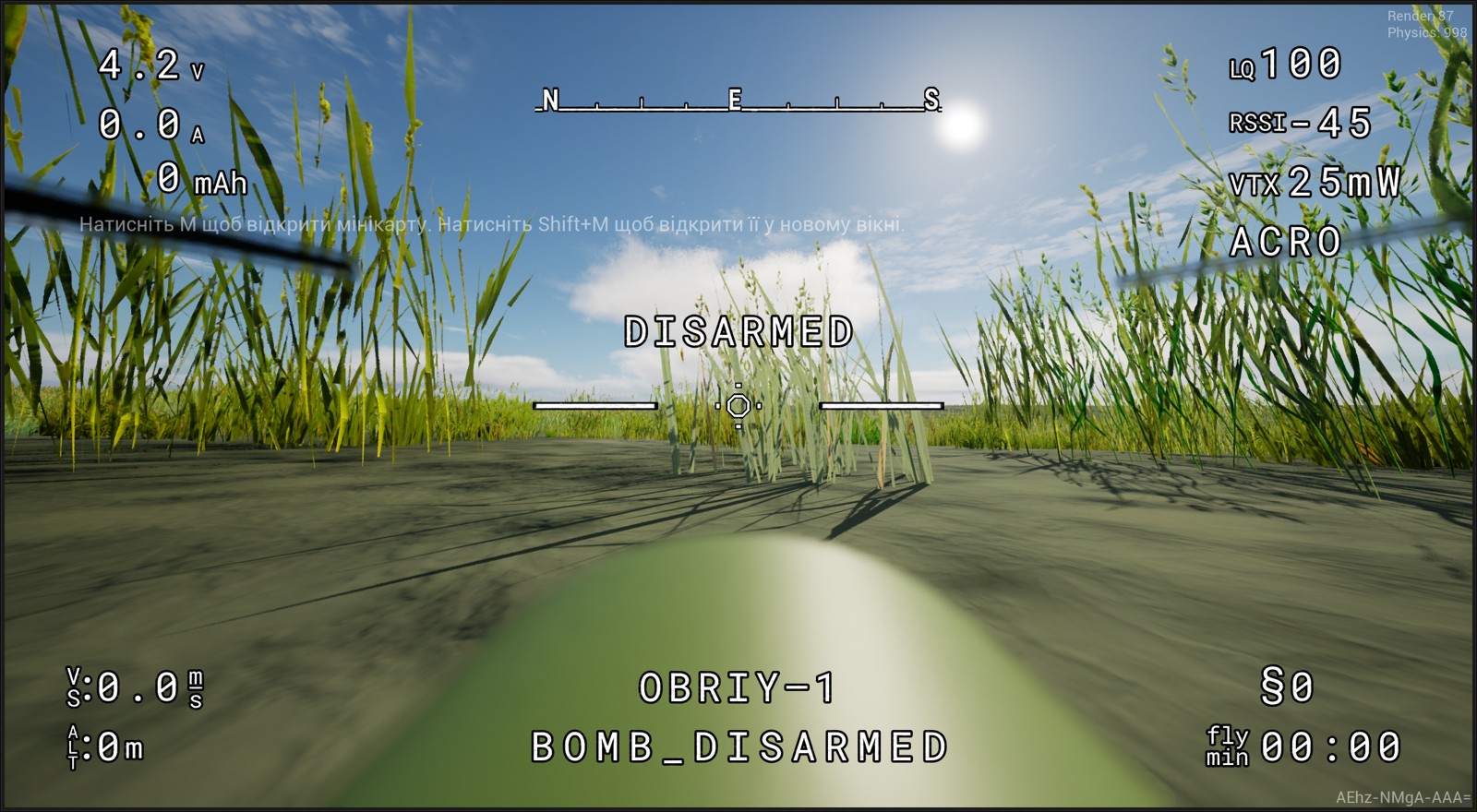
FPV Drone OSD#
The following is displayed on the screen:
- 4.2V - Battery voltage per cell.
- 0.0A - Current draw.
- 0mAh - Battery capacity consumed.
- Compass.
- LQ 100 - Percentage of received control radio link packets.
- RSSI -45dBm - Received signal strength indicator in decibels.
- VTX 25mW - Drone video transmitter power level.
- ACRO - Flight mode.
- DISARMED - Warning that the motors are not engaged.
- V S 0.0m/s - Drone's vertical speed.
- ALT 0m - Drone altitude relative to the starting point according to the barometer.
- OBRIY-1 - Drone name.
- BOMB_DISARMED - The bomb fuse safety is engaged.
- § 0% - Throttle level received by the drone from the controller, in %.
- fly min 00:00 - Flight time.
Move:
- Arm down
- Throttle down
- Arm up
- Throttle up
The drone will start moving. Move Flight Mode up to switch to Acro mode.
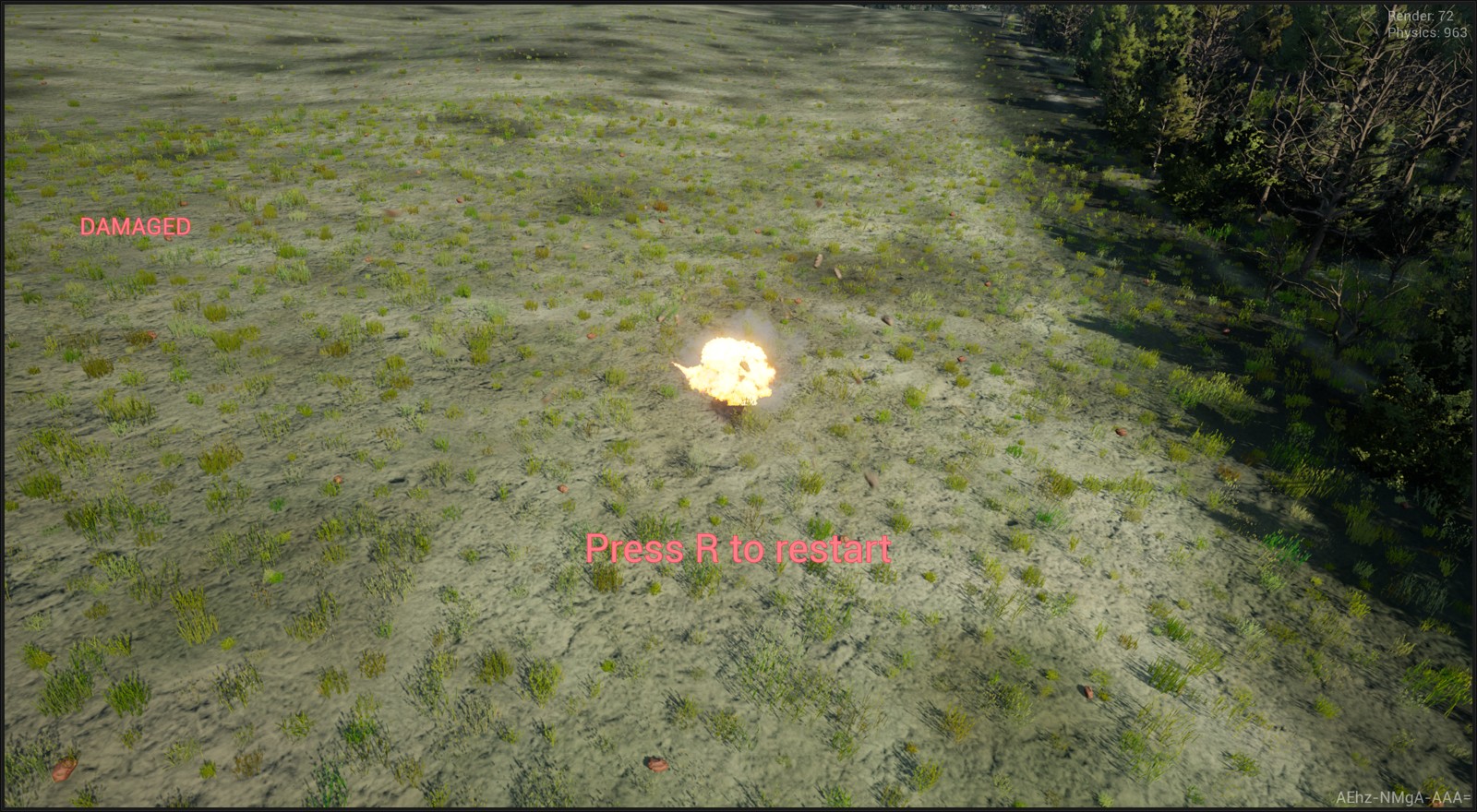
If flying with explosives and crashing into the ground or hitting an enemy, you may see the following:
- Press R to restart - which is self-explanatory.
- Damaged - the drone is rendered inoperable.
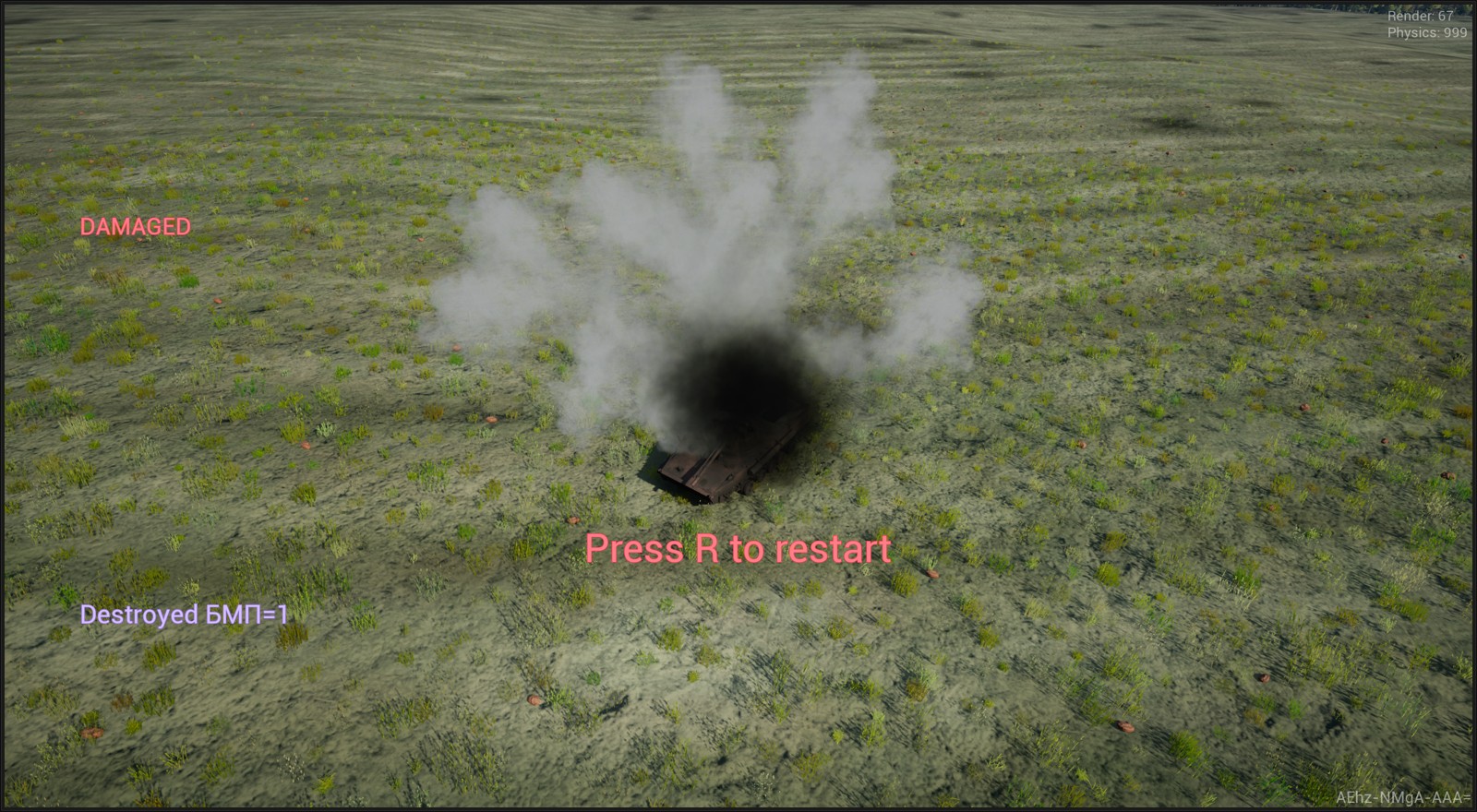
- If a target is destroyed, a score appears in the bottom left, showing target types and the number of units hit. In this case, it shows Destroyed BMP=1. There are two statuses for a hit target: Damaged (a direct hit but insufficient for destruction, requiring more strikes) and Destroyed (target eliminated).
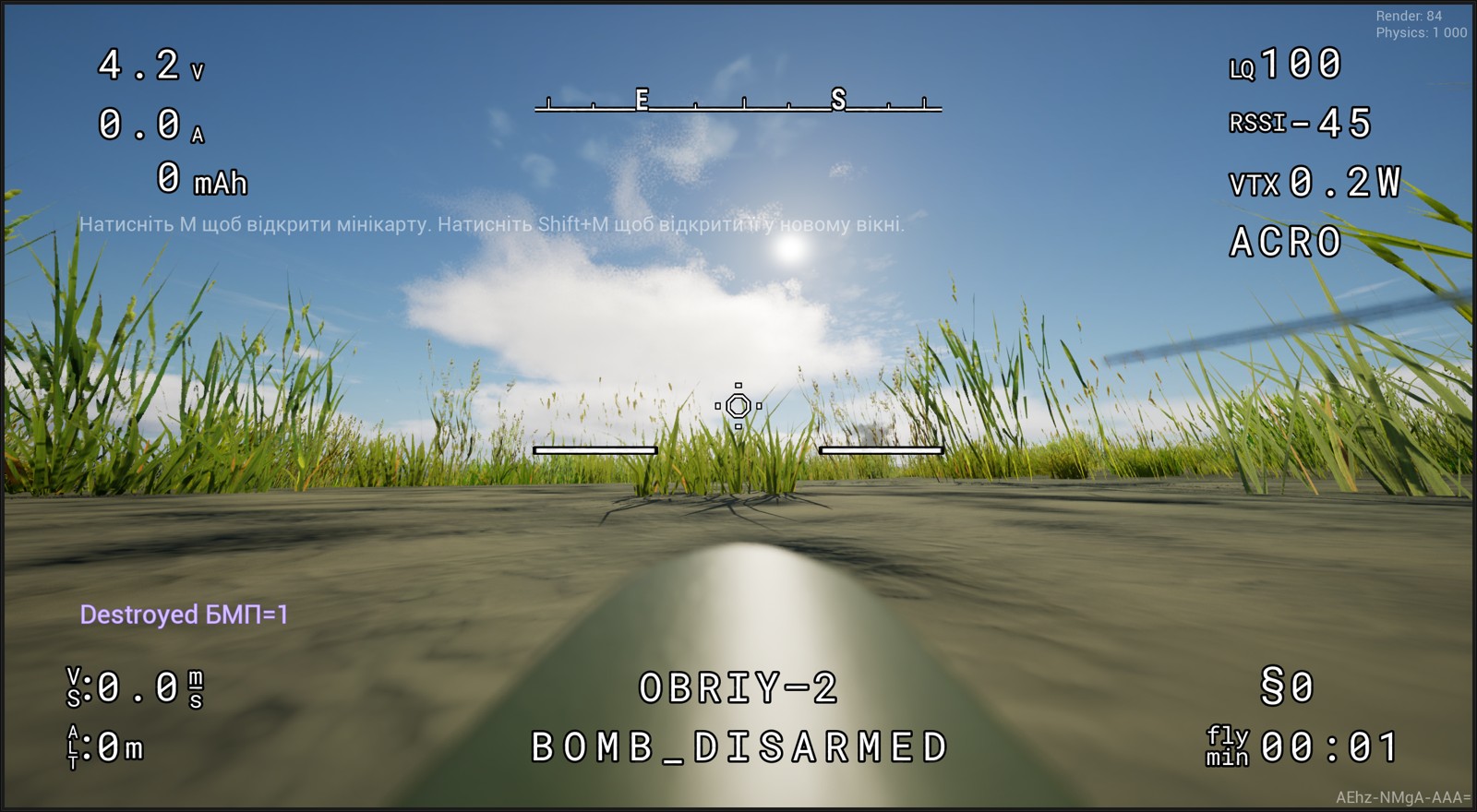
After restarting, your attempt number increases to OBRIY-2.
Bomb Drop Practice#
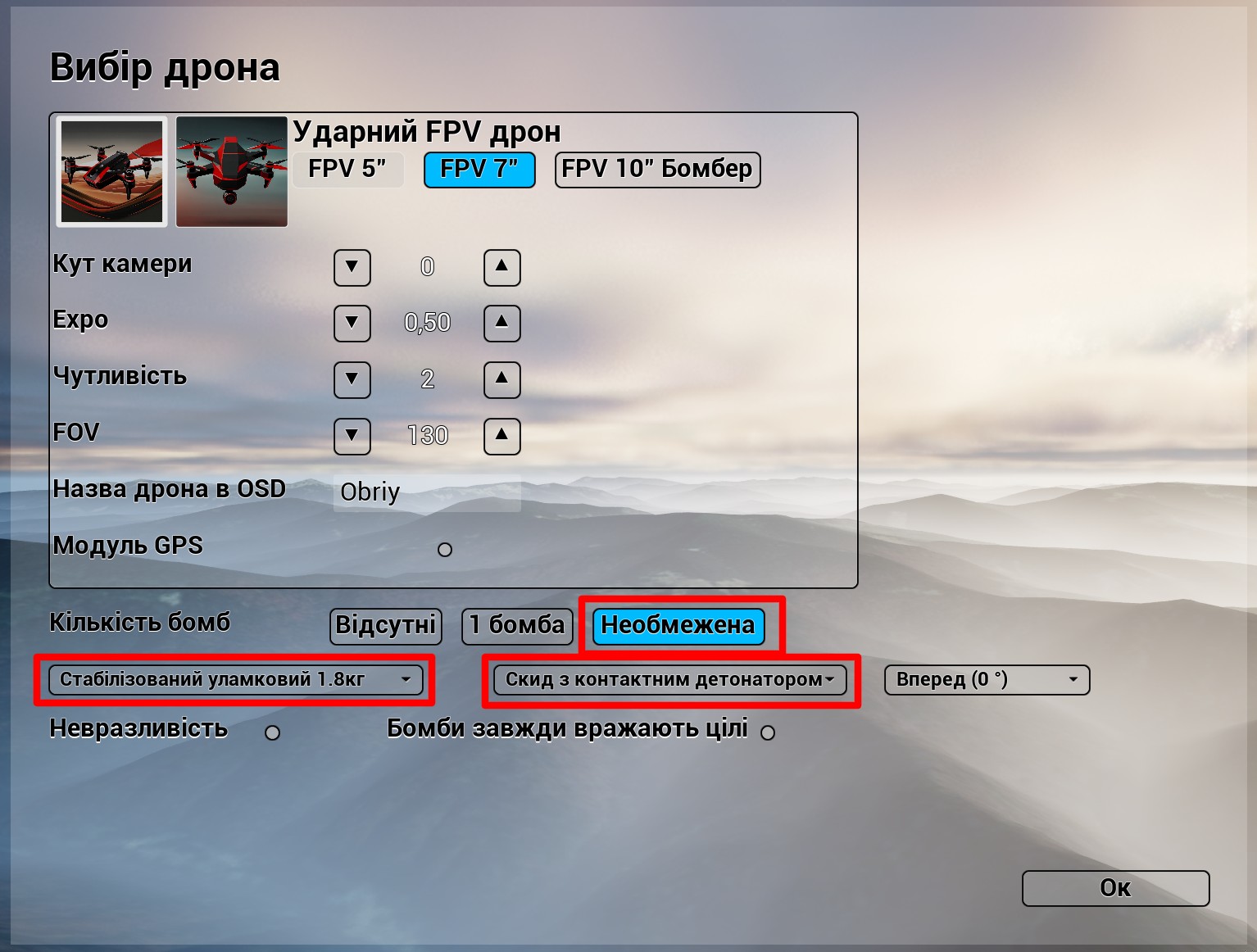
The FPV bomber differs significantly from standard FPV drone equipment, and bomb drop mechanics vary based on the execution technique. For the most standard drop method, choose one of the stabilized fragmentation munitions and a contact fuse with a drop function. Initially, you can take an unlimited number of bombs, eliminating the need to restart after each strike — new bombs will appear in place of the dropped ones.
Fly toward the target, and as you approach, press the drop button on the controller, Bomb. After making the drop, you can fly forward slightly, turn around using Yaw, and observe the results.
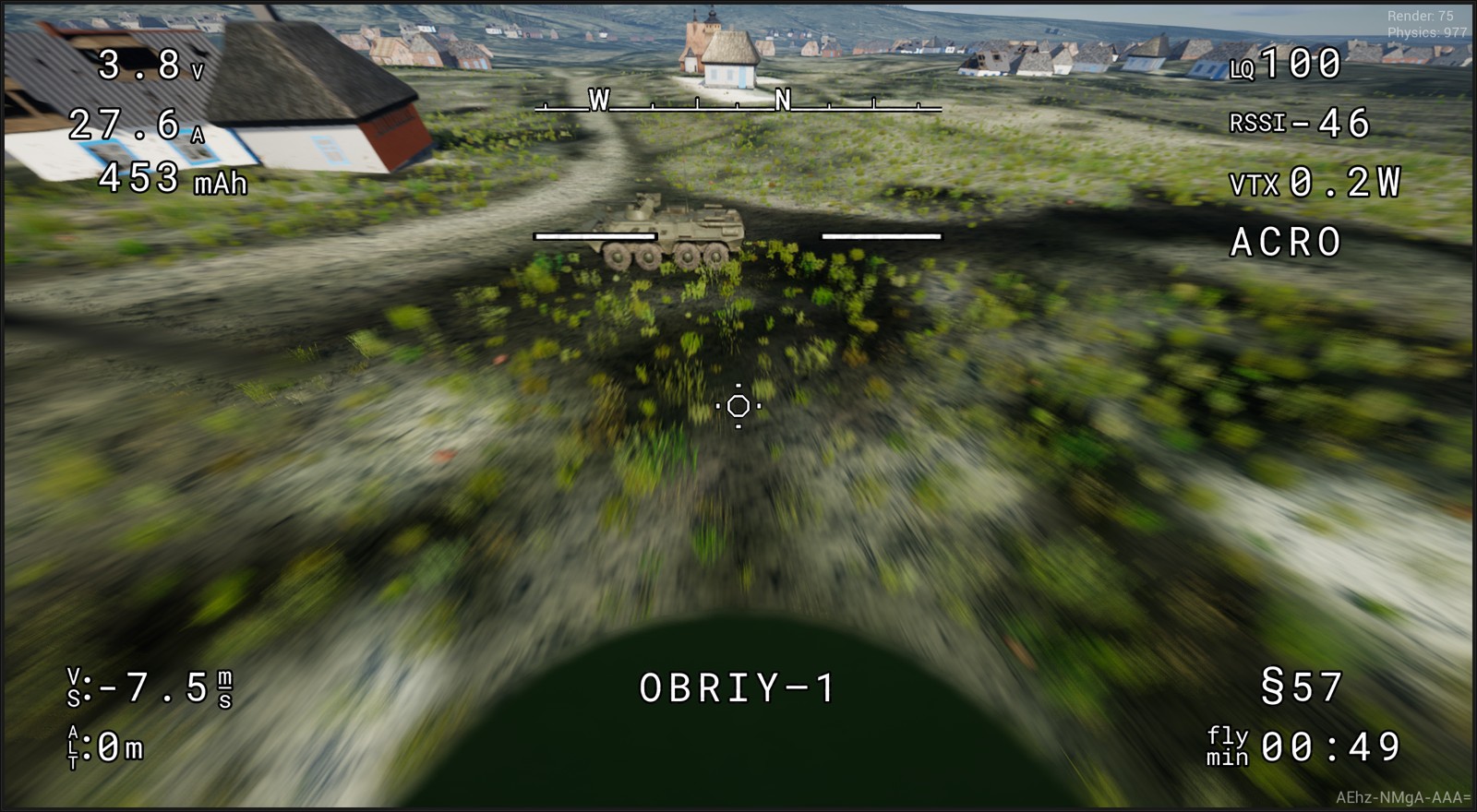
When a vehicle is destroyed, it starts burning and emitting smoke. If you miss the target, smoke will rise, allowing you to analyze and correct your timing and decide whether you should make the drop earlier or later.
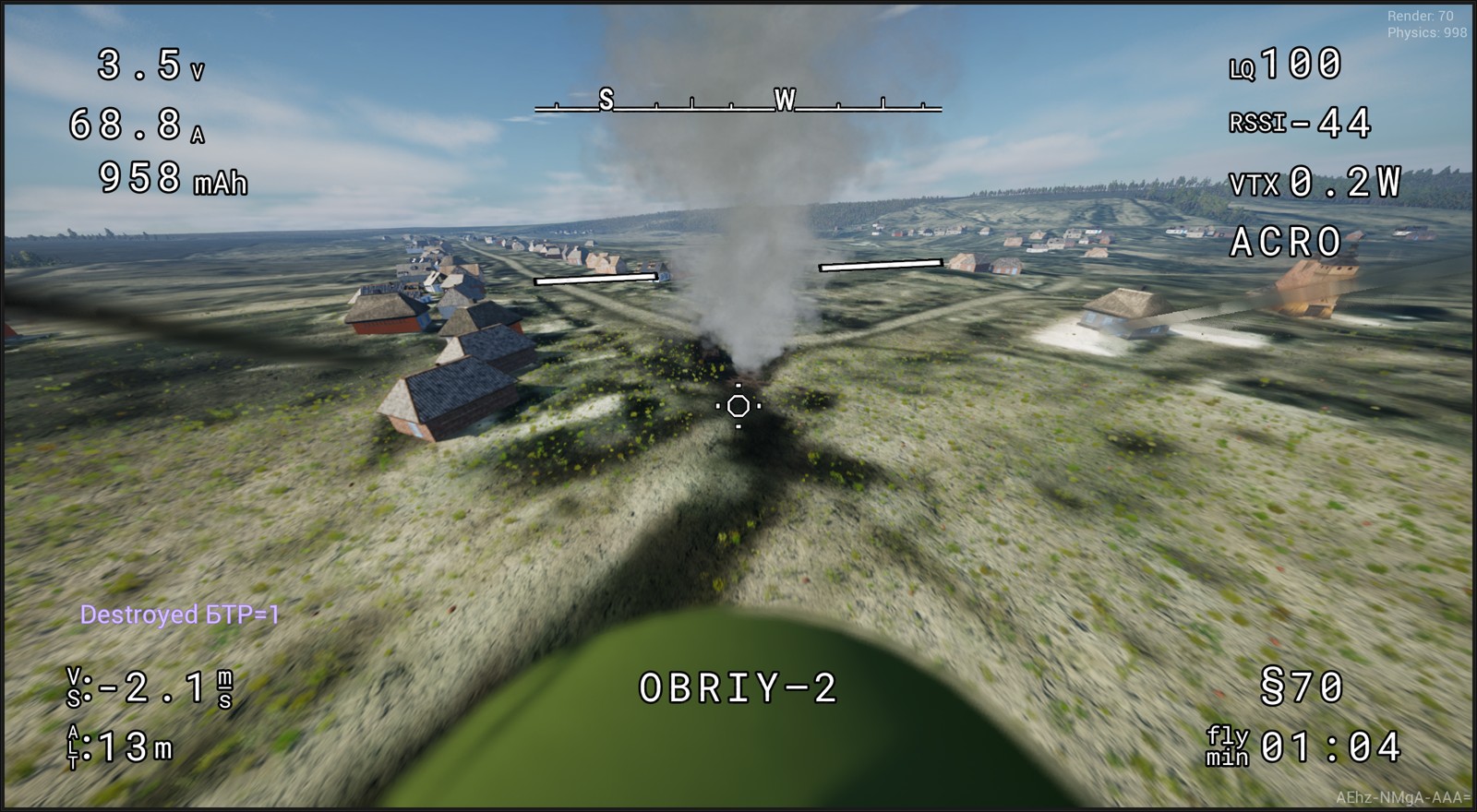
The compass display on the OSD is also crucial, helping with spatial orientation. Maps are vast, and even if the target is only 2-3 treelines away, flying in the simulator can take a long time, and it is even possible to get lost.
Note
One key characteristic of any bomb drop is the activation time of the release mechanism. In Obriy, the activation time is approximately 0.3s.
Kamikaze Mode Flight#
This mode differs from the previous one in that no additional switches are needed for bomb drops. You simply set the type of explosive in the settings, select Contact fuse without safety, and fly toward the target.
The simulator also allows for airburst detonation. To enable this, your controller model must have a programmable channel. This channel is then mapped to Bomb, and in the FPV drone settings, Detonator initiation board is selected.
Overall, the Detonator initiation board is the recommended fuse for all FPV kamikaze drones, as it combines both a safety function and an airburst detonation capability.
Flight Training in Signal Degradation Conditions#
When the direct line of sight between the drone and the video receiver worsens, the Simulator visually represents this by video interference, which can even completely disrupt video transmission. Therefore, if we understand that these are just obstructions caused by flying too low or going behind an obstacle (a building, tree line, etc.), we can regain direct visibility by simply increasing the drone’s altitude, even in the complete absence of video transmission.
This physics model allows trainees to understand the importance of the radio horizon already at the simulator stage. It also enables practice flights that closely resemble combat scenarios. For example, executing kamikaze strikes where video loss occurs when descending toward a target due to the radio horizon.
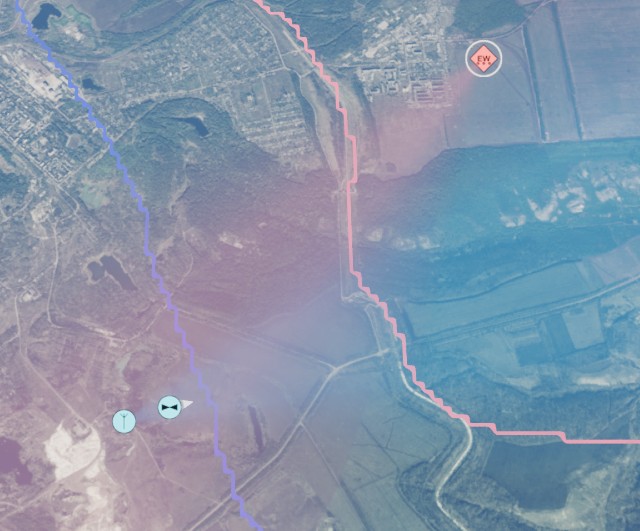
When we place enemy or friendly EW systems on the map, they begin to affect signal levels.
If the antenna is within the EW system’s range, RSSI (Received Signal Strength Indication) decreases.
As we approach the EW system, the LQ (Link Quality) value drops. When LQ is around 20, the drone starts responding to commands with delays and jerks. If LQ continues to drop, the drone stops responding entirely.